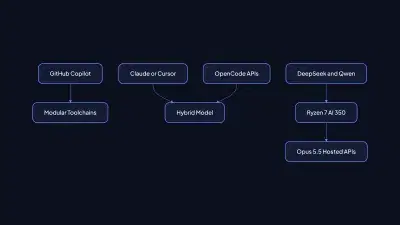
The Reality of Agentic Workflows in Production Coding
We analyze current developer AI setups, moving past the hype to examine real-world utility in coding and documentation tasks.

End-to-end technology services engineered for scale, from specialized engineering talent on demand to production AI and custom software delivery.
Engineering perspectives, architectural blueprints, and practical guides from the Neno Technology team.
We analyze current developer AI setups, moving past the hype to examine real-world utility in coding and documentation tasks.
The release of Ripple-65B offers a new contender for agentic coding tasks. We evaluate its performance claims and discuss what engineering teams should consider.
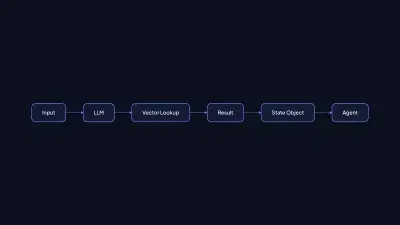
Moving beyond simple RAG to autonomous agentic workflows requires rethinking state management and execution limits. We examine the architectural trade-offs for production-grade agentic systems.
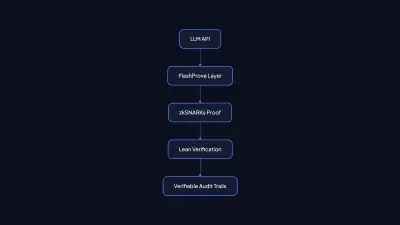
Cryptographic proofs for LLM inference are moving from theory to reality. We examine what verifiable model outputs mean for production pipelines.
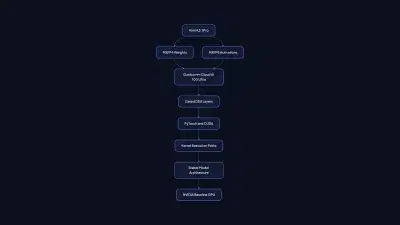
With the release of Kimi K3.1 Pro, we examine whether Qualcomm's Cloud AI 100 Ultra hardware can handle the inference demands of massive MoE models.
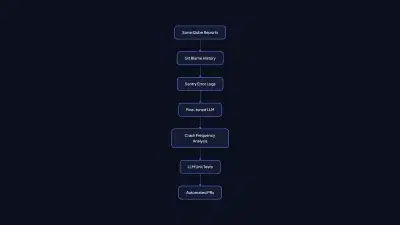
Moving beyond manual code reviews by using LLMs to prioritize technical debt based on actual production impact and crash rates.
Moving beyond perimeter-based security, this article details practical Zero-Trust implementation patterns. We explore granular access controls, identity fabrics, and micro-segmentation to build resilient, high-velocity enterprise environments.
Apache Iceberg provides robust table formats for data lakehouses, enabling high-velocity data operations and strong governance. This article details its architectural advantages for scalable analytics.
Moving beyond static LLM interactions toward autonomous agentic architectures. This analysis evaluates the architectural requirements, state management, and safety guardrails necessary for enterprise-grade autonomous systems.
Quantum computing threatens current asymmetric encryption standards. This assessment outlines the technical transition path for securing cloud-native infrastructure against harvest-now-decrypt-later attacks.
Decoupling UI domains through event-driven architectures introduces significant operational complexity. This guide explores the trade-offs between team autonomy and runtime consistency.
An engineering deep-dive into Ripple-65B, evaluating its sparse activation mechanics, memory footprint, and production deployment tradeoffs for enterprise systems.
Moving beyond standard tracing, this analysis explores eBPF for deep kernel-level security enforcement and high-fidelity performance telemetry in complex distributed systems.
Moving cloud workloads to low Earth orbit introduces extreme thermal and radiation constraints. This analysis covers the shift from terrestrial data centers to autonomous orbital compute clusters.
Evaluating the structural bottlenecks of distributed monoliths when scaling LLM inference engines and heavy vector search workloads.
An architectural analysis of RISC-V integration into data center fabrics, focusing on instruction set efficiency and the cooling-to-compute ratio.
An architectural assessment of DuckDB 2.0.0 LTS within modern data lakehouses, focusing on vectorised execution efficiency, memory footprint constraints, and state synchronisation tradeoffs.