

01The illusion of the input-output pricing table
AI providers publish rates for input tokens, cached tokens, and output tokens. These figures fail the moment an application handles dynamic, multi-turn interactions. Public calculators do not account for reasoning tokens or context caching efficiency.
Teams rely on vendor pricing calculators and watch budgets deplete within weeks. Different models use distinct reasoning patterns. Some providers charge for cache storage, while others alter rates during peak hours. Media payloads like images and voice streams increase the variance. Capturing raw cost metadata from provider responses remains the only accurate method to track burn rate.
02What 51,000 production API calls actually taught us
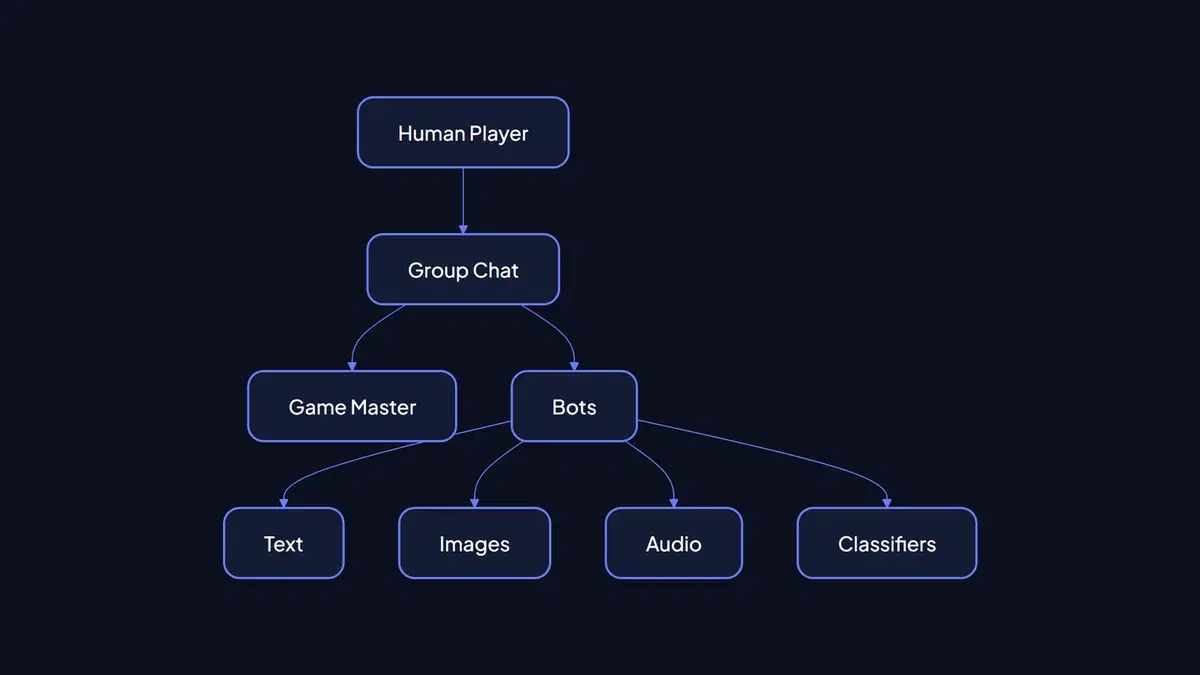
We analyzed production data from an AI-driven text game supporting 27 frontier models across 51,000 API calls over 53 days. The architecture uses a group chat with a human player and 5 to 15 bots, which involves long conversations, rule enforcement, and periodic memory compaction.
- Across 6 unique daily users, total spend averaged $6.36 a day. Typical daily spend runs under $6, with minimum days dropping below 30 cents and high-traffic spikes reaching $16. Total spend broke down across categories over the 53-day period:
| Category | Total Spend | Daily Average | Share | | --- | --- | --- | --- | | Text (bots, Game Master, story) | $212.30 | $4.01 | 63% | | Images (portraits, illustrations) | $94.66 | $1.79 | 28% | | Audio (bot voices, speech to text) | $28.29 | $0.53 | 8% | | Classifiers (turn routing, screens) | $1.96 | $0.04 | 0.6% | | Total | $337.21 | $6.36 | 100% |
- A session lasting 50 turns or more costs $1.49 on average. This splits into $1.03 for text, $0.32 for images, and $0.13 for voice across roughly 165 AI turns.
03Why reasoning tokens break your financial models
Every bot action triggers an API request that sends context and receives a response. The response payload returns the exact token count. Token consumption shifts depending on model tasks.
| Bot Turn Type | Share of Turns | Tokens In | Cached Tokens In | Tokens Out | Cost Per Turn | | --- | --- | --- | --- | --- | --- | | Introduction | 13% | 3,690 | 504 (14%) | 299 | $0.0030 | | Day discussion | 46% | 8,218 | 3,544 (43%) | 428 | $0.0041 | | Vote | 19% | 10,094 | 1,987 (20%) | 511 | $0.0060 | | Night action | 10% | 11,950 | 3,254 (27%) | 503 | $0.0065 | | End-of-day summary | 11% | 13,545 | 945 (7%) | 1,124 | $0.0100 | | Post-game chat | 1% | 12,313 | 4,101 (33%) | 348 | $0.0055 |
The end-of-day summary performs a compaction step where every bot reads the day's events and rewrites its notes. It consumes 13,545 input tokens and generates 1,124 output tokens, making it the most expensive turn type at one cent per action. Cache hit rates drop to seven percent during heavy compaction phases because prompt context shifts rapidly.
04Building internal telemetry instead of trusting calculators
Vendor pricing tables do